
The Rosetta Stone
The Rosetta Stone is famous. ANd it dates to 196 B.C.E. It belongs to the Ptolemaic period. Also it measures 112.3 x 75.7 x 28.4 cm. Moreover, it is displayed in the British Museum, London.
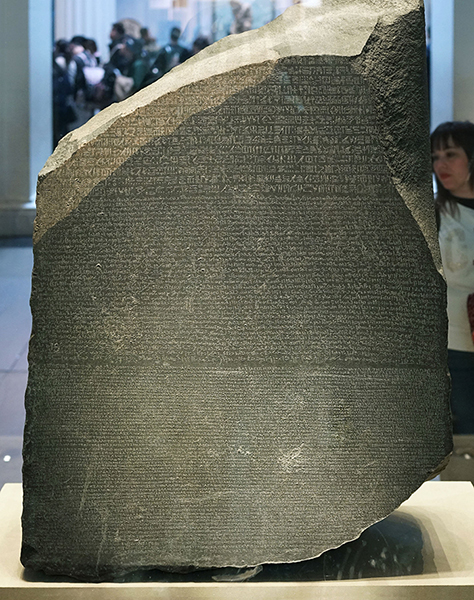
The key to translating hieroglyphics
Discovery of The Rosetta Stone
Soldiers found it in Egypt. First, they dug near Fort St Julien. Then, they uncovered the black tablet. Afterward, French forces took it. However, the British gained possession in 1801. Since then, it has stayed in London.
Key to Translating Hieroglyphs
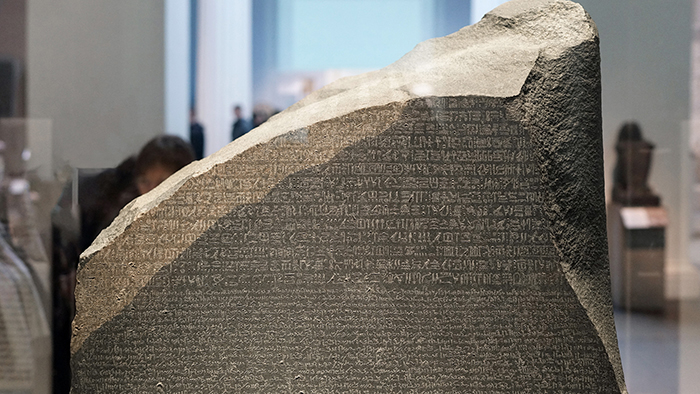
Hieroglyphs once became unreadable. They vanished after the fourth century C.E. Then, the Rosetta Stone appeared in 1799. Scholars used it to decipher hieroglyphs. First, Thomas Young studied the royal name. Next, Champollion read the language. Thus, Egyptology made great progress.
Opposition to the Ptolemies
Material and Shape of The Rosetta Stone
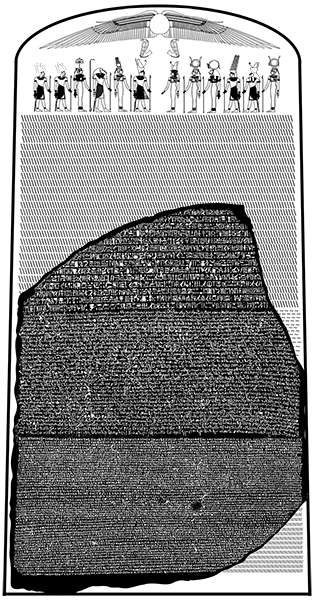
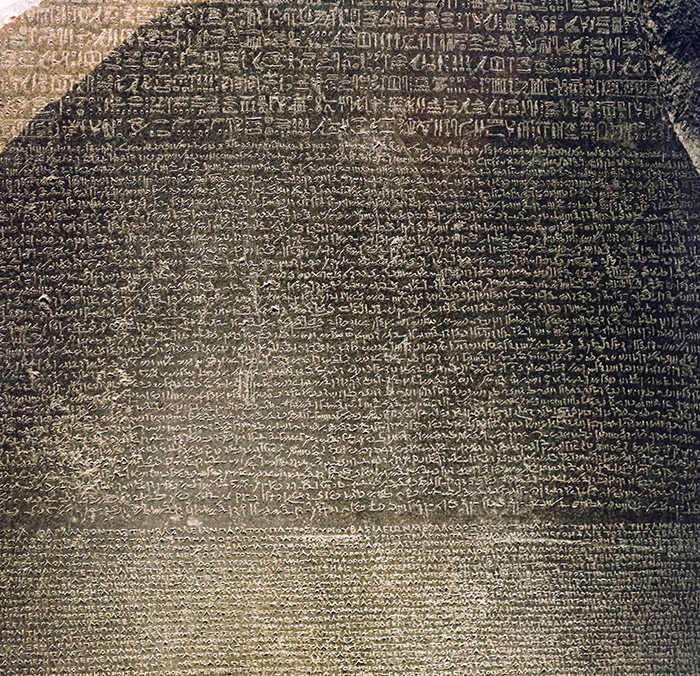
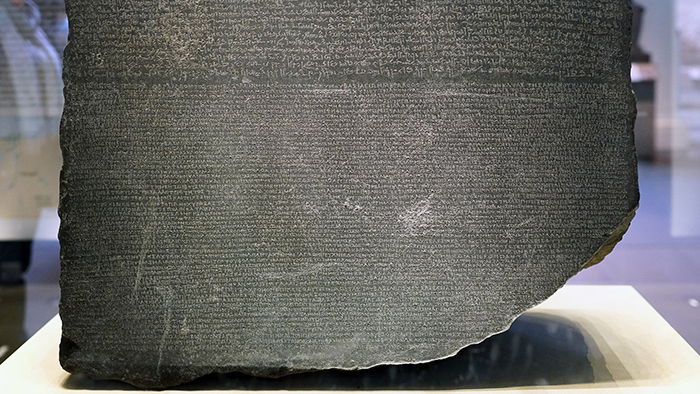
The stone is granodiorite. Also, it has a pink streak. The top is broken. Meanwhile, the back is rough. In contrast, the front is smooth. Moreover, the text forms three bands. They show hieroglyphic, demotic, and Greek scripts.
The Inscriptions of The Rosetta Stone
The text shows the same decree. First, it praises Ptolemy V. Next, priests passed it. Moreover, it marks the king’s first anniversary. The hieroglyphs served religious purposes. The demotic script served daily use. The Greek translation helped scholars. Thus, all three scripts provide context.
Historical Context of The Rosetta Stone
Before Ptolemies, kings made decrees. Then, the priests issued them. They kept hieroglyph knowledge. Moreover, the decree lists good deeds. This ensured priestly support. Opposition existed in some regions. The Delta and Thebes required control.
Analysis and Cleaning of The Rosetta Stone
After discovery, scholars copied the text. Ink revealed letters in reverse. Later, the stone became dirty. Human grease and wax coated it. In 1999, the British Museum cleaned it. They removed all residues carefully. Only one corner stayed untouched. Finally, the inscriptions appeared clearly.
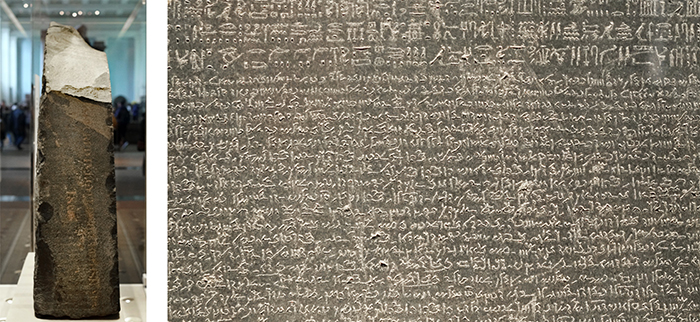
First, the left image shows a detailed view of the right side of it. Meanwhile, the right image highlights the Demotic script. Moreover, both images display the inscriptions clearly. In addition, they reveal the fine craftsmanship of the Ptolemaic period. Finally, the photos emphasize the historical and linguistic importance of the Stone, now in the British Museum, London.
Color and Material of The Rosetta Stone
The stone is grey-pink. A pink streak runs through it. Traces of reddish-brown appear in text. Scientists found hydroxyapatite mineral. Iron may cause the color. Whether applied intentionally is unknown.
Translation of the Demotic Text
It records King Ptolemy V’s decree. First, it names the king. Then, it praises his deeds. Moreover, it mentions gods. Also, it celebrates Egypt’s prosperity. Finally, it emphasizes the king’s power.
Cairo Daily Tours with Egypt Tour Guide
First, meet your guide. Then, start the city tour. Next, visit top landmarks. Also, explore old streets. Meanwhile, enjoy local life.
Afterward, see famous sites. For example, visit mosques. Also, walk historic quarters. Then, stop for lunch. Thus, relax and recharge.
Later, enjoy smooth travel. Moreover, hear clear stories. Also, take great photos. Finally, end the day smiling. Therefore, Cairo feels unforgettable.
Leave a Reply