The Ramesseum – Temple of Ramses II
King Ramses II built the Ramesseum Temple around 1279–1213 BC. The temple is made of sandstone. In addition, it inspired many later temples in Egypt.
Structure of the Ramesseum
The Ramesseum is one of Luxor’s most famous ancient sites. Visitors can explore its pylons, columns, and detailed wall reliefs.
First Pylon and Courtyard
The temple starts with the first pylon, which faces four tall flagpoles. Its inner walls display the Battle of Kadesh. After passing the first pylon, visitors enter the first courtyard. Although the courtyard is mostly destroyed today, the southern side still has two rows of columns. Meanwhile, the northern side originally held Osirian columns.
Second Pylon and Hall of Columns
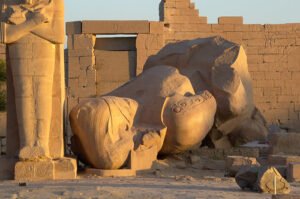
Next, visitors reach the second pylon, which houses a huge statue of Ramses II. Although the second courtyard is mostly ruined, it once featured rows of columns. Then, visitors enter the Hall of Columns, which has six rows of large, decorated pillars. These columns, along with the reliefs, demonstrate the skill of ancient Egyptian builders.
Chapels and Supporting Buildings
In addition, the temple complex includes chapels for many gods. Builders also constructed bakeries, kitchens, and storage rooms. These buildings supported daily rituals and temple activities. Overall, the Ramesseum highlights the grandeur and religious importance of ancient Egyptian temples.
Why Visit the Ramesseum
Visiting the Ramesseum allows travelers to experience Ramses II’s power firsthand. Moreover, the giant statues and wall reliefs amaze every visitor. Therefore, the historic ruins make it a must-see site in Luxor.
Art and Decoration
The walls show Ramses II fighting his enemies. In addition, they depict religious ceremonies, funerals, and other rituals. The temple features massive statues, including a 17-meter Ramses II statue. This statue weighs about 1,000 tons. Furthermore, the impressive columns and detailed reliefs show the artistry of ancient Egyptian builders.
Discovery and History
The Ramesseum remained unknown until the 18th century. First, Frederick Ludwig Norden described the ruins. Later, Napoleon’s scientists documented the temple carefully. In 1829, Champollion visited the site and named it Ramesseum. Today, visitors see it as one of Egypt’s most important monuments, reflecting pharaonic architecture and history.
Leave a Reply