
Statue of Isis of Coptos Statue of the goddess Isis, so-called “Isis of Coptos”. She wears a tripartite wig with uraeus. The sun disc and cow’s horns identify the sculpture as Isis or Hathor. Her dress is Egyptian and sheath-like, and around her neck she wears an incised collar of beads. In ancient Egypt, the...

Statue of Kai The statue shows Kai sitting on a high-backed chair. He wears a shoulder length wig, decorated with horizontal rows of curls. Each eye is framed in copper, while his eyebrows are in raised relief. The lips are thin and finely drawn. Below, he wears Usekh or Wesekh (broad) collar, composed of seven...
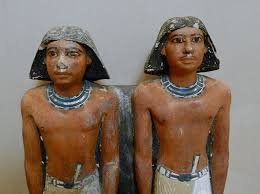
Double Statue of Nimaatsed The statue Of Nimaatsed shares one base. Moreover, both figures appear nearly identical. However, heights differ slightly. Hands and Rods Of Statue of Nimaatsed His hands rest by sides. Also, he holds two rods. These rods symbolize dignity and power. Head and Wig Of Statue of Nimaatsed On his head sits...
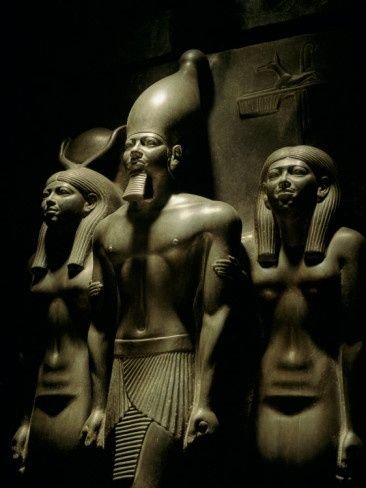
Triads of Menkaure Egyptologist George Reisner discovered three schist triads of Menkaure. And they were found in the valley temple near his Giza pyramid. First, archaeologists discovered the triads in 1908 inside Menkaure’s valley temple. Moreover, they found five, Although builders likely placed eight originally in the corridors. Triad of King Menkaure Triads of Menkaure ...

The Shell of Sekhemkhet The Shell of King Sekhemkhet stands near Saqqara. And it honors King Sekhemkhet. Archaeologists found it carefully. Its shape shows early pyramids. The Shell of King Sekhemkhet is a small container that was reproduced in the form of a seashell. The Shell swings open on a tiny hinge and clasps shut...

Statue of King Djoser Statue of King Djoser shows Him . And it is a life-size. Also it dates to the 3rd dynasty. And now, it stands in Cairo museum. Statue of King Djoser Discovery Location Archaeologists discovered it carefully hidden. Specifically, it was placed inside a serdab. Notably, the serdab was completely sealed. In...

Mask of Tutankhamun The gold funerary mask of Tutankhamun is an example of the highest artistic and technical achievements of the ancient Egyptians in the New Kingdom. The exact portrayal of the king’s facial features achieved here made it possible for his soul to recognize him and return to his mummified body. Thus ensuring his...

Sandals of Tutankhamun King Tutankhamun would symbolically trample on his enemies when he wore his sandals. This unique sandal are also adorned on the top and bottom by the nine bows, symbols of the traditional enemies of Egypt. This pair of sandals is made of leather and depicts enemies on the soles. Four human figures...
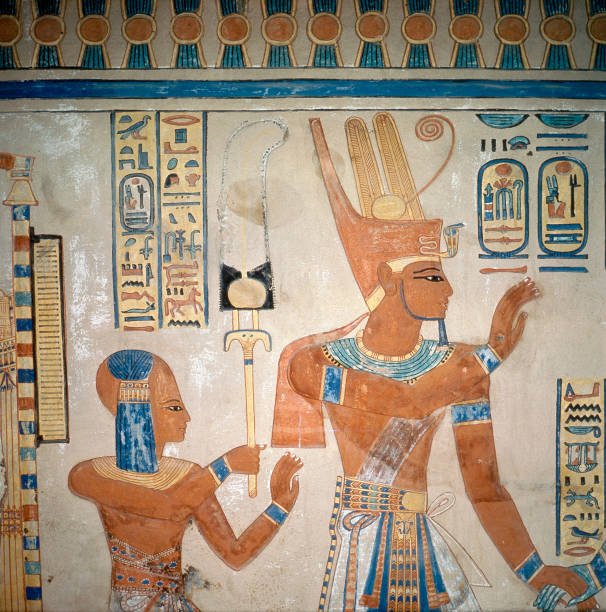
Side-lock of Youth Prince Amunherkhopshef New Kingdom, 20th Dynasty, c. 1186–1155 B.C. Tomb of Amunherkhopshef (QV55), Valley of Queens, West bank, Luxor. Prince Amunherkhopshef was the eldest son (and heir) of Ramesses III and Isis Ta-Hemdjert. The Prince died at approximately 15 years of age, likely during the 30th year of Ramesses’ reign. Photograph by...